

Living with the risks and uncertainties of our world
Our approach to organisational resilience
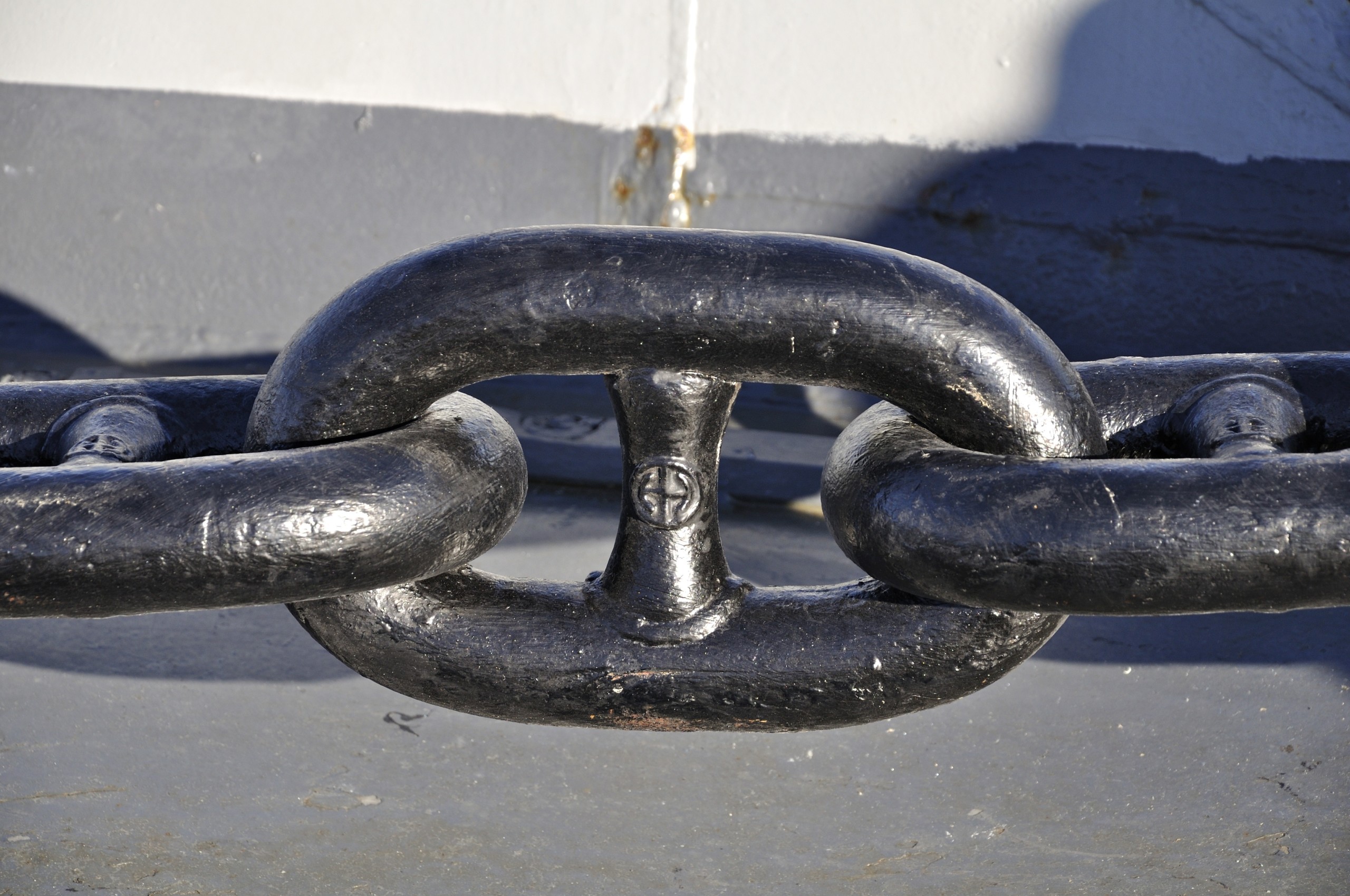
We hear a lot about « resilience »… But often in a sense close to « resistance » to shocks, whether physical, financial or psychological. A common use of the word comes from child psychiatry, where it describes children’s ability to rebuild themselves after trauma.
Yet organisational resilience does exist: it is studied and applied, in particular, by specialists of High Reliability Organizations and Resilience Engineering. This resilience is not about an organisation’s ability to protect itself so that no accident ever happens, but about living with risk, and surviving… In our highly complex societies, both technologically and humanly, accidents are inevitable. What matters is to survive their consequences as well as possible. So rather than looking for culprits – all too easy to name, depending on the balance of power at the time –, the focus is on collaboration and learning. Such modern ideas, aren’t they?
To discover some of these approaches, which we can put into practice in your organisation, read the article on LinkedIn – on our blog (in French).
A course to put it into practice
Our course « Turning our failures, like our successes, into sources of lasting performance » teaches how to make the most of individual and collective lessons learned, so as to find solutions rather than culprits. Its principles draw in particular on new approaches to safety in high-stakes sectors: nuclear, oil and mining, shipping and aviation, healthcare…
Three areas of application
Since 2020, we have had to learn again that we were not at the “end of history”… The comfort of our Western world, and the hope raised by the fall of the Soviet Union and the end of the nuclear threat that a global confrontation could make us fear – what was called “happy globalisation” – have given way to turbulence, shocks and uncertainty.
As experts in organisational transformation, we are therefore at the heart of current events, offering our perspective and our help in a wide range of contexts.
Here are three of them, which show how we can help you face this return of uncertainty and of the “fog of war”.
Our lessons from the Covid-19 crisis

At the height of the Covid crisis, we felt it was essential to understand what was happening, and to anticipate what would come next.
To understand, we carried out a survey that allowed us to draw some conclusions and, above all, to make recommendations…
You will find them on our page on remote and hybrid work, which has since become standard in every organisation. It already existed in the international companies we had been supporting for years, so it was only natural for us to share our findings and convictions while most organisations were discovering this practice – and rushing into it in a bureaucratic way.
But we also offered a perspective on crisis management – which is not the same as emergency management. You will find one of the articles published at the time below. Others followed; you can read them on our blog (in French).
And you, what will you change after this crisis?

From mid-April to early May 2020, we surveyed 300 LinkedIn users about how they saw themselves, and their company, administration or organisation, in the face of this major crisis. This was just before the 50-day mark which, according to submariners, is a key milestone in individual and collective psychological dynamics.
See the survey results on LinkedIn – on our blog (in French)
Why not dare the « Angel’s Leap »?

Government decisions met with mixed reactions: acceptance, resignation, grumbling, opposition, even disobedience… When faced with opposition, the usual response is to impose. And the more the other side « disobeys », the more bans and obligations pile up… More of the same, again and again… until exhaustion or explosion.
As specialists in mobilisation dynamics, especially in times of crisis, we obviously do not share this authoritarian reflex. It answers neither the need to adapt to complexity nor the challenge of resilience. Those require pooling every skill and coordinating them across the organisation, rather than concentrating power at the top. Because a business leader is never right on their own.
So, for the Institut de la Sociodynamique, one of our partners and a valuable source of inspiration, we wrote an article on the « Angel’s Leap »: a bold mobilisation strategy for when opposition runs too high. Read the article on LinkedIn – on our blog (in French).
Living in a world of uncertainty

Contrary to what many believe – or rather hope – uncertainty is the normal state of affairs.
While some would like to programme our lives scientifically, many factors stand in the way of putting the world in order. And the “damned human factor”, as the famous astrophysicist Hubert Reeves described it, is only one of them.
Our world is not necessarily “chaotic”, in the sense that it follows a certain number of “possibilities”. But at times we are at the edge of chaos, and therefore in the realm of the unpredictable.
For leaders of companies and organisations who try as far as possible to reduce uncertainty, this is deeply uncomfortable. Yet learning to live in this uncertain world is essential. That too is a form of support we provide, drawing on our academic, professional and operational expertise.
You will find two articles on these topics below, and more on our blog (in French).
- Are you ready not to be ready? (2020, in French)
- Cognitive warfare: where companies stand (2024, in French)
International relations
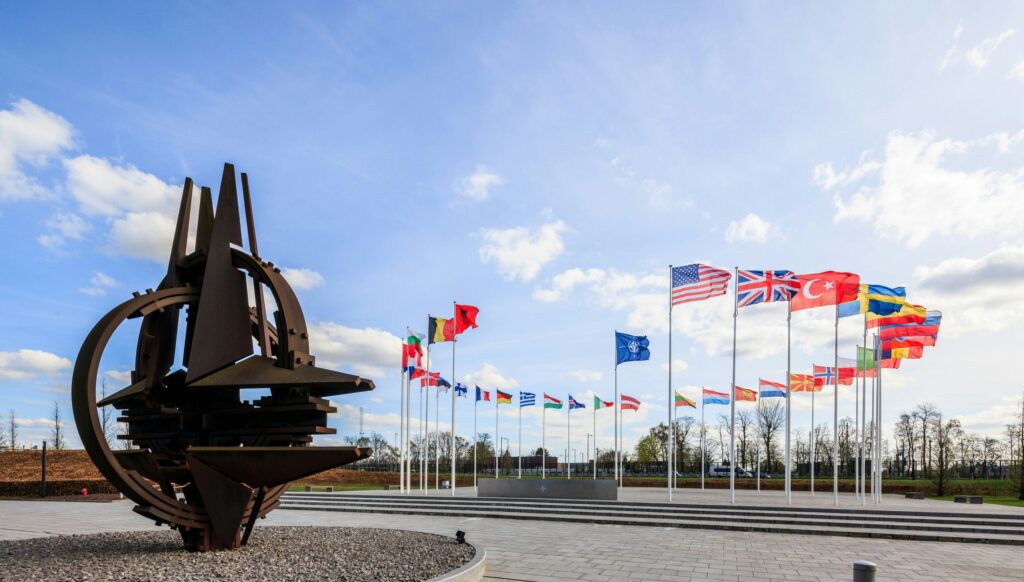
Russia’s invasion of Ukraine, conflicts in the Near and Middle East… and tomorrow? After a long Cold War, we lived through years that kept war far from the daily concerns of most Europeans. We forgot too quickly that, in 1991, war was already tearing European peoples apart, in the former Yugoslavia and then across the Balkans… But current events now threaten our collective security too, and security architectures are changing at high speed.
Armed forces and security organisations are admittedly not quite like any others, given their missions and their means of action. But they are organisations too, and we are able to offer them our perspective and very hands-on support. Because our skills can be transferred to every professional world. And also because we know these very particular environments, through our experience and our commitment.
Below are a few examples of these skills put into practice, in this context too.
- International relations: golden goose or fool’s gold? (2026, in French)
- NATO: an organisation like any other? (2025, in French)